Research Opportunities
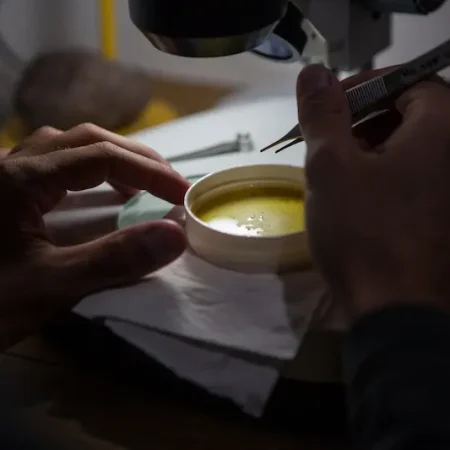
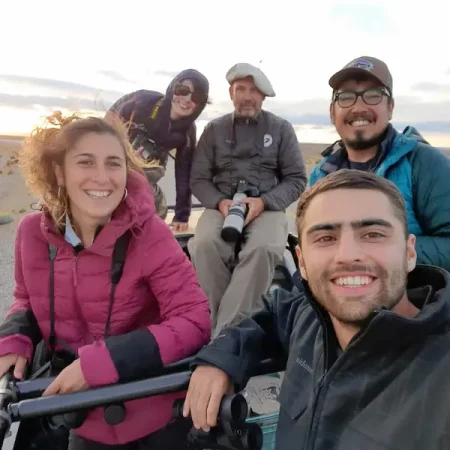
If you are interested in joining the Hooded Grebe Foundation team to conduct research – at different levels of your career – on this page you will find the lines that we are planning to develop – or continue – in the short and medium term. We describe the ideas on which these projects are based and include some guidelines on how we function as a work team in terms of time needs and articulation between the different areas of the Foundation.
It is essential to understand that the Hooded Grebe Foundation works in a coordinated manner among all its members. That is, we all do the work of everyone, we help and support each other, collaborating for the integral development of the entire team, usually including logistical tasks collaborating with the technical staff of communication and education.
We avoid adding researchers to the team who are only interested in carrying out their research without sharing their time with the rest of the team or attending to other tasks. The Hooded Grebe Foundation is made by all of us, so we need the support of the entire team.
The research opportunities seek to generate collaborations with research groups from Argentina and the world, since one of the objectives of the foundation is to generate a network of collaborations that contribute to the conservation of biodiversity.
Research Opportunities
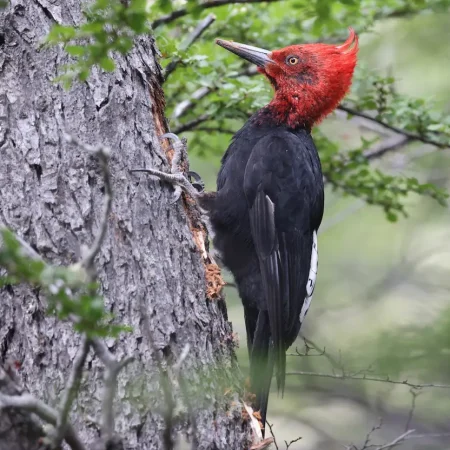
Conservation of the Magellanic Woodpecker (Campephilus magellanicus): evaluating its status in a broad latitudinal gradient
- OBJECTIVE: to determine the status of populations of this charismatic species endemic to the Andean-Patagonian forests across a broad latitudinal gradient, studying aspects of its biology and natural history and the relative impact of different proposed and yet-to-be-identified threat factors.
- WORK AREA: Andean-Patagonian Forest, from Neuquén to Tierra del Fuego.
- PROJECT TYPE: ideal for starting as a bachelor's or master's thesis and continuing toward a doctorate.
- NECESSARY EFFORT: it involves a lot of fieldwork, for long periods of time in extreme conditions in Patagonia.
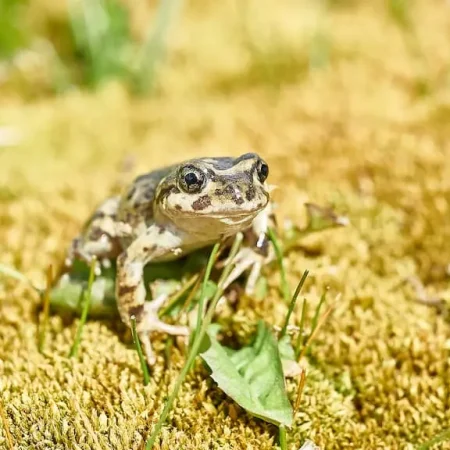
Population status of Atelognathus nitoi
- OBJECTIVE: the objective is to learn about the basic aspects of the ecology of this amphibian species endemic to Patagonia, study the status of its populations, and identify and measure the impact of the threats it faces.
- WORK AREA: will develop mainly (though not exclusively) on the high plateaus of western Santa Cruz.
- PROJECT TYPE: ideal for a doctoral project, although it can potentially be started as a master's degree, but with the intention and desire to continue.
- NECESSARY EFFORT: it involves a lot of fieldwork, for long periods of time in extreme conditions in Patagonia.
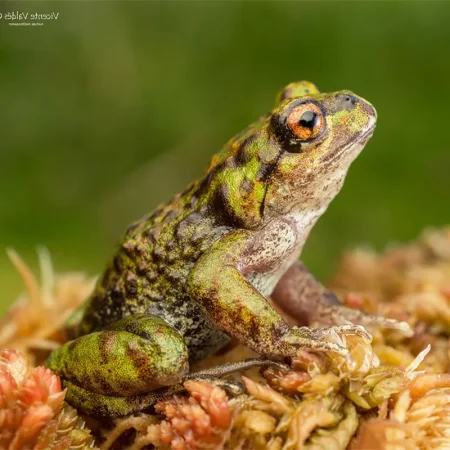
Population status of the Puerto Eden Frog (Chaltenobatrachus grandisonae)
- OBJECTIVE: The objective is to learn about the basic aspects of the ecology of this amphibian species endemic to Southern Patagonia, study the status of its populations, and identify and measure the impact of the threats it faces.
- WORK AREA: will take place mainly (but not exclusively) in the Río de las Vueltas valley, in the Chaltén area of Santa Cruz.
- PROJECT TYPE: ideal for a doctoral project, although it can potentially be started as a master's degree, but with the intention and desire to continue.
- NECESSARY EFFORT: it involves a lot of fieldwork, for long periods of time in extreme conditions in Patagonia.
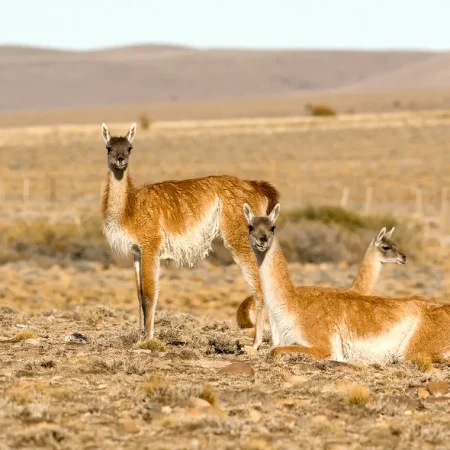
Populations of guanacos and other large herbivore species in different productive and non-productive systems in Southern Patagonia
- OBJECTIVE: This project seeks to continue and expand the Hooded Grebe Foundation's herbivore population study. It also aims to broaden the range of questions needed to support the sustainable management of populations.
- WORK AREA: Austral Patagonia.
- PROJECT TYPE: ideal for postdoctoral research or entry into a research career.
- NECESSARY EFFORT: it involves a lot of fieldwork, for long periods of time in extreme conditions in Patagonia.
Apply
Complete this form if you are interested in working with us in any of the open opportunities.
© Eliseo Misciu