Volunteering
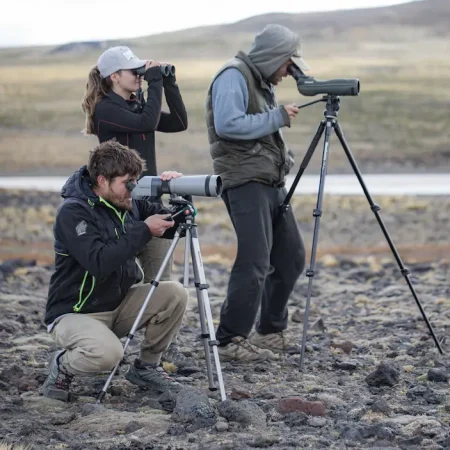
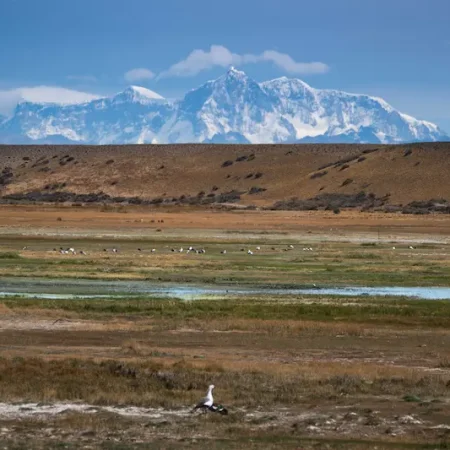
The Hooded Grebe Foundation volunteer program offers a practical and educational experience in biodiversity conservation for people interested in protecting nature through the support of scientific information and fieldwork. It is aimed at those seeking a first approach to conservation and who wish to contribute directly to the protection of Patagonian biodiversity.
Since its inception, the Foundation’s work has been possible thanks to the efforts of hundreds of volunteers who have selflessly joined to prevent the extinction of the Hooded Grebe. They were the ones who, at first, camped on the plateaus to understand what was happening to the species and why it was becoming increasingly difficult to find. Volunteers also helped shape the Hooded Grebe Project, manage resources, build infrastructure, and address the main threats it faced. Today, each field campaign is a space for learning and commitment where volunteers accompany technicians and researchers at the various work sites of The Hooded Grebe Foundation.
Welcome to a new season
We are pleased to begin a new work campaign on the plateaus with the aim of saving the Hooded Grebe from extinction and protecting the biodiversity of Southern Patagonia. For this, we have the invaluable support of volunteers who join the team each year and accompany us into the field to conduct research and conservation activities.
This volunteer program aims to provide an introduction to biodiversity conservation to people interested in nature protection, in a practical way and with solid scientific evidence backing it. Given the particular characteristics of its remote geographical location and extreme climatic conditions, we ask that you read all the information available on this page before applying for the volunteer program.
Context: the challenge
The steppe and high plateaus of Southern Patagonia comprise one of the most inhospitable and least explored ecoregions in South America. This vast territory is home to a biodiversity of incalculable value, which unfortunately has a low level of protection.
The emblematic Hooded Grebe (Podiceps gallardoi) inhabits this unique environment. This species, endemic to Santa Cruz, was discovered by Western science less than half a century ago and, nevertheless, is already categorized by BirdLife International and the IUCN as Critically Endangered. Its population is estimated at only 750 individuals.
Due to its critical conservation status, in 2009 the associations Aves Argentinas and Ambiente Sur launched the Hooded Grebe Project to save this unique species from extinction. Today, as Hooded Grebe Foundation (hereinafter HGF), we have a committed team that carries out research, conservation, communication, and education tasks. Year after year, we generate robust scientific information on Patagonian species and ecosystems, implement direct conservation actions, and promote public policies to achieve greater regional impact.
Among the Foundation’s objectives is the creation of learning and training opportunities for people interested in conservation. That is why every year we organize the volunteer program, aimed at all those people interested in experiencing a first approach to the world of conservation and contributing to the protection of Patagonian biodiversity. We desire that its participants use this volunteer program and that it become a valuable tool for replicating our conservation strategies in other regions of Argentina (and, why not, the world!).
If after reading the content of this section you have any questions, please complete the contact form at the end of the page.
This volunteer program is possible thanks to the support and sponsorship of
What you need to know before applying
We ask that you please read the detailed information below carefully. Once your application is submitted, you will be confirming that you accept our conditions and requirements. Any breach could result in the suspension or termination of your volunteer work.
Our team is made up of people with training in biology, park rangers, environmental engineering, students, and naturalists of various ages and backgrounds. During the campaign we enjoy good food, music, and long conversations on the plateau, although what unites us most is our passion for conservation and working to save critically endangered species (such as the Hooded Grebe).
We hope that all participating people can enjoy their experience, establish new relationships, learn about conservation, and get to know some of the inhospitable places that Argentine Patagonia offers.
Search Profile
- People with a genuine interest in the conservation and/or research of biodiversity.
- Passion for learning, proactive attitude, good humor, and good disposition.
- Have adequate personal equipment for fieldwork.
- Ability to enjoy camping for periods without a bathroom, long walks, and group living.
- Good physical condition and psychologically prepared to work in extreme weather conditions.
- A good attitude toward tasks outside of fieldwork, such as maintaining and cleaning common areas and work equipment.
- First-aid knowledge will be valued in the selection process (not required).
- It is not necessary to have prior knowledge and/or experience.
- FMT is designed with a long-term outlook. Applicants with innovative ideas and an interest in the topics covered—who want to develop their undergraduate thesis, master’s degree, or even future PhD research—will be favored in the selection process. In this sense, we have the necessary structure to help bring those ideas to life and to carry out new research projects.
Possible Tasks to Develop
- Data collection in nesting colonies of the Hooded Grebe. Capture and marking of individuals.
- Monitoring and surveying of fauna (mammals, birds, amphibians, and reptiles).
- Censuses of aquatic and shorebirds.
- Censuses and detection of invasive species such as American Mink and Kelp Gull.
- Assistance to colony guardians (detection and control of factors that negatively affect colonies).
- Monitoring of large herbivores.
- Development and implementation of direct conservation actions.
- Outreach and education work in the area.
- Habitat restoration.
- Support with equipment maintenance tasks and cleaning work areas.
- Your area of interest will be taken into account, although the tasks to be developed will be carried out almost in parallel, we will seek your participation in most of the activities, but it is not always possible, it all depends on your time of stay in the volunteer program.
Dates, Length of Stay, and Costs
The volunteering period for the 2026–2027 season will run from October 15 to May 1. To participate, you must be able to stay for a minimum of 30 days, bearing in mind that entry and exit dates are the 1st and the 15th of each month.
Thanks to support from various organizations and companies, FMT partially funds participants from Latin American countries. This grant includes transport between the town of Comandante Luis Piedrabuena and our field bases, as well as all transfers required as part of the volunteering program, four meals a day, and accommodation for the entire stay. If you stay more than 45 days, FMT covers the insurance; otherwise, insurance is the volunteer’s responsibility.
For people from non–Latin American countries, the cost of volunteering is USD 30 per day, covering what is established in the previous paragraph. If you stay more than one month, the cost is USD 25 per day.
The transfer from and to the locality of origin are the responsibility of each person, as well as all expenses associated with this transfer (food and accommodation) and personal expenses (hygiene items, medicines, snacks, etc.).
How to get There
Our meeting point will be in the town of Comandante Luis Piedrabuena, Santa Cruz province. We will coordinate the details by email in advance regarding the date and time for your transfer to one of our bases. At the end of the volunteer period, we will take you back to the same town so you can return to your place of origin.
Workplace and Climatic Conditions
The bases during the volunteer program may vary between:
- Las Tunas, located in the central-west of Santa Cruz province, on the Lago Strobel plateau and in the Lago Cardiel area. Together with La Carlina, it forms a Patagonian steppe area that hosts breeding colonies of the Hooded Grebe and some of the main continental nesting sites of the Magellanic Plover; its historic main house serves as a base for fieldwork in the area.
- La Carlina, adjacent to Las Tunas, in the same central-west sector of Santa Cruz. It shares the steppe landscape and high-altitude wetlands of the Lago Cardiel area—with Hooded Grebe presence, Andean Condor, and Patagonian carnivores such as the puma and the culpeo fox.
- La Cautiva is an estancia located in the central-west of Chubut province, in the northeast of the Tehuelches department, on the southern sector of the Sierra de Languiñeo, with access via Provincial Route 63 (about 40 km from both José de San Martín and El Molle). It is a steppe area with a rich archaeological and geological heritage.
- El Chaltén Base, located right in the center of the town of El Chaltén, is the operations base for work in the southern area of Santa Cruz province.
- “Juan Mazar Barnett” Biological Station, located 130 km from the town of Perito Moreno on the southern slope of the Meseta del Lago Buenos Aires, on Provincial Route 103 and just a few meters from Patagonia National Park.
At these sites, you will share the space with our team and with researchers from other projects. You will also likely take part in field trips that will sometimes involve several nights of camping.
The environment of the Santa Cruz plateaus is extreme, with winds of more than 100 km/h and a large daily thermal amplitude; temperatures can vary between several degrees below zero at night and exceed 30 degrees during the day. Significant levels of insolation are added to these conditions, so it is necessary to have adequate clothing and equipment to work comfortably, taking care of your health and thus also avoiding incidents.
Communication and Internet Access
In our workplaces, there is neither a telephone signal nor mobile data. All communication is done by radio or the Internet. The Internet connection at the bases is good; however, service interruptions are frequent and may last several days. The HGF has satellite phones for use only in emergencies (medical or mechanical). Please evaluate if the lack of access to communications means serious complications for you.
Food and Health
The meals during the campaign consist of stews, soups, breads, sausages, and recipes based on potatoes and meat (mainly sheep). The ingredients in the field are limited (as in any wild camp kitchen). Only meals specifically for health reasons will be covered, not for personal choices.
It is essential to keep in mind that Patagonia is not a place where it is easy to maintain a vegan or meat-free diet, as meat is an integral part of the diet, and it is challenging to obtain protein from other foods. In any case, we believe that this should not be a limiting factor for your participation in the volunteer program. The meals are prepared in rotation among all, an activity coordinated and defined by the HGF team.
The field tasks during the volunteer program require long walks, so you must be in good health and willing to complete these tiring days. You must know your physical abilities and resistance to work in adverse climatic conditions. We have first-aid kits and trained personnel to respond to emergencies or accidents, but each person is responsible for carrying the medicines and supplies necessary for their personal health. The HGF is not responsible for costs arising from pre-existing conditions, nor for volunteers’ negligence.
Safety Standards
The plateaus are places of little and difficult access, the distances to urban centers are large and the human density is low, its climate is changing and there are few points of reference; which makes them a place conducive to accidents and setbacks, which can be avoided or minimized by maximizing precautions.
The sun on the plateau has a much greater impact on the skin than in temperate and tropical zones, due to the absence/thinness of the ozone layer, the minimum atmospheric humidity and the thinness of the atmosphere in general (due to the latitude). Consequently, UV radiation is much higher, so it is essential to use sunscreen with filter 50+ and apply it several times during the day, to avoid burns and blisters.
Vans will make frequent transfers during the volunteer program. The vans will be driven exclusively by Hooded Grebe Foundation personnel. All passengers must always wear a seat belt and follow the care instructions provided by the team technicians.
Walks in the field will be a frequent activity, since many places are inaccessible even for vans. The minimum equipment to carry includes enough shelter to avoid hypothermia, water needed for the day, flashlight and GPS with charged batteries, some food and a first aid kit.
Getting lost on the plateau is relatively easy, and in situations of closure produced by rain and low clouds it is almost impossible to locate. The GPS is a fundamental tool for these situations; your cell phone will surely have one, although you must remember to previously download the map of Patagonia to be able to use it without connectivity, in addition to having the reference points and the battery charged. During the night, the reference points disappear completely and getting lost is a matter of meters. To avoid disagreements, always pay attention to the indications of the team technicians.
When visiting and/or staying overnight at the ranches, it is advisable to avoid alcohol consumption with the ranchers. In particular, if the ranchers do not have alcohol, it is because in those cases it is the owner of the ranch who prefers not to give it to them. When visiting these places, ideally go with a male companion. Although most of the ranchers are friends, it is preferable to avoid uncomfortable situations.
Whenever possible, always carry a method of communication (InReach or Handy), even when going to nearby sites. Check that the batteries are charged and make sure you know how to use them.
As part of the control tasks of invasive alien species, the HGF has weapons. These can only be manipulated by the technical personnel assigned by the Foundation, and under no circumstances should they be manipulated by volunteers or visitors.
During night tours, all safety rules must be followed. Whenever you need help, do not hesitate to consult with our technical team! In case of serious problems or abnormal situations, avoid making big decisions independently. Always seek communication with those responsible for the Foundation.
Rules of Coexistence and General Conduct
While you participate in the volunteer program, you are part of the Hooded Grebe Foundation, so your attitudes and performances in front of third parties will affect the HGF. Therefore, during visits to the towns and ranches, our behavior and attitude must be governed by cordiality, good manners, and respect.
During the campaigns, the basic rule of good vibes always prevailed: respect, share, collaborate, and the only important requirement is to have a good predisposition. The cleanliness and order of the work spaces, the vans, and the camps are everyone’s task.
The cleaning of the common areas (rooms, kitchen, bathrooms, living room, etc.) is done daily.
In the places mentioned above, food is cooked and water is heated with firewood; collecting and cutting firewood so that the drawers are always full is another of the daily tasks.
Upon returning from the field, the work only ends when the vans and camping equipment are clean and stored, in conditions for the next team to use them.
Treat the equipment (tools, tents, instruments) with great care and notify in case of malfunction or breakage (it can happen!).
There are always things to do, from cleaning the houses/posts/tents, equipment maintenance. The lack of things to do is simply a lack of proactivity of the individual. Ask how you can collaborate or serve mates to someone who is doing something, it is helping and putting good vibes!
Coexistence can be intense. Respecting personal spaces, you contribute to a pleasant and enjoyable coexistence.
The activities that you decide to carry out outside the framework of the volunteer program will not be the responsibility of the Foundation. Activities that involve certain risks, such as climbing on rock walls, running (jogging), going out to explore or even going out to observe birds, among others, are under the exclusive responsibility of the person who performs them. The HGF will not be responsible for the economic costs arising from injuries or problems resulting from these activities. This also applies to visits to towns.
Respect for Nature and Waste Management
The spirit of the HGF is based on a deep respect for nature; therefore, the premise is that our presence in the area has the least possible negative impact. Avoid generating loud noises or sudden movements, touching nests or disturbing the fauna, and under no circumstances is it admissible to leave marks or writings/petroglyphs on the walls of the lagoons, plateaus, and walls of the visited posts.
Proper waste management is essential. In the work spaces we separate the waste between recyclables (plastics, papers, and glass), non-recyclables, and organic waste. You will receive exact instructions for this when you arrive.
In the field, waste management requires an extra effort on our part: our goal is to leave absolutely no waste behind. In the camps, we do not compost or leave organic waste lying around: degradation in these environments is extremely slow. All the waste we generate must be returned to any of our bases for proper disposal, including toilet paper. Under no circumstances should latrines be created in sites near the lagoons.
Both in the field and around the bases, you will find remnants of old garbage. We ask that you please help collect them in your free time and during transfers (by car or on foot).
Confidentiality of Data and Acoustic/Audiovisual Materials
As in any conservation and research project, the information produced during fieldwork is a fundamental part of its capital. Therefore, all data obtained during the period of work within the framework of the volunteer program belongs to the HGF, and its use in other areas must be formally agreed upon by the members responsible for it. This includes publishing data and/or audiovisual material on social networks and forums, as well as in popular science magazines and for scientific purposes. This also applies to information concerning management action protocols, fauna control, and other similar actions.
The dissemination of images showing the work or results of the HGF must be previously agreed upon with the communication or coordination team of the same, regardless of whether the publication will be on social networks or in other media (magazines, newspapers, television, etc.).
All photographic material, recordings, and filming obtained during the context of the volunteer program must be immediately available for use by the HGF. It is understood that the copyright will remain with those who have made the records of the material. Before finishing your stay, you must leave a copy of all the material obtained in the HGF Audiovisual Bank. If you are selected for the volunteer program, you will receive instructions.
Participation in the volunteer program implies agreement with the use of audiovisual material in which you are portrayed for the dissemination and promotion purposes of the HGF.
Essential Personal Items
- Warm clothing (warm jacket, thermal underwear, windproof pants).
- Light clothing for hot weather and waterproof gear for rain (a poncho or jacket with Gore-Tex or similar).
- Gloves, warm hat, and sun hat.
- Trekking shoes (in good condition, ideally more than one pair) and old shoes for river crossings.
- Wind goggles and/or sunglasses with good side coverage.
- Sleeping bag for low temperatures (-5ºC or -10ºC) and thermal insulator. Keep in mind that you will sleep in your bag during your entire stay, even in the different bases.
- A flashlight for personal use (the flashlights provided by FMT are only for fieldwork).
- SPF 50 sunscreen or higher, artificial tears, and lip balm with sunscreen.
- Personal hygiene items: soap, shampoo, creams, razors, etc.
- A large backpack and a smaller one to carry your belongings during hikes and camps.
Recommended Personal Items
- GPS (always welcome).
- Personal radios (VHF).
- Computer for personal use, in case you consider it necessary.
- Field notebook.
- Binoculars and/or telescope + tripod.
- Reading material, letters, crossword puzzles, dice, or any other board game (long waiting times during wind storms can be more pleasant with something to do).
- A tablet and/or mobile phone (most internet access in cities is via the Wi‑Fi in cafés and restaurants).
- Bird guides such as Birds of Argentina and South-west Atlantic (Pearman & Areta), Aves de Argentina y Uruguay (Narosky Yzurieta), and Aves de Chile (Jaramillo) are useful. Other field guides, such as for mammals, reptiles, or plants, are also recommended (make sure they include information on Patagonian species).
Apply to the volunteer program
To apply for the 2026-27 season volunteer program, you will need to complete the following form and attach a single PDF containing:
- A letter of intent briefly explaining your interest in participating and your availability.
- A letter of reference, preferably from someone in the field of conservation, research, or a related area.
- Your CV.
We will accept applications until September 30, 2026 (inclusive). By submitting your application, you confirm that you have read the conditions, agree to them, and will abide by them if selected. We will only contact pre-selected candidates within one month of the application deadline.
If you have any questions or concerns, please write to us at fundacion@macatobiano.org.
© Gonzalo Pardo
Origin
We have received participants from more than 25 countries.
Newsletter
Subscribe to receive a notification the next time we open a call for applications.
© Gonzalo Pardo